← All product groups

Products & Solutions · 02

Electroplating

Copper, nickel, tin, zinc, chromium, silver and gold baths are managed together with current, additives, agitation and filtration.
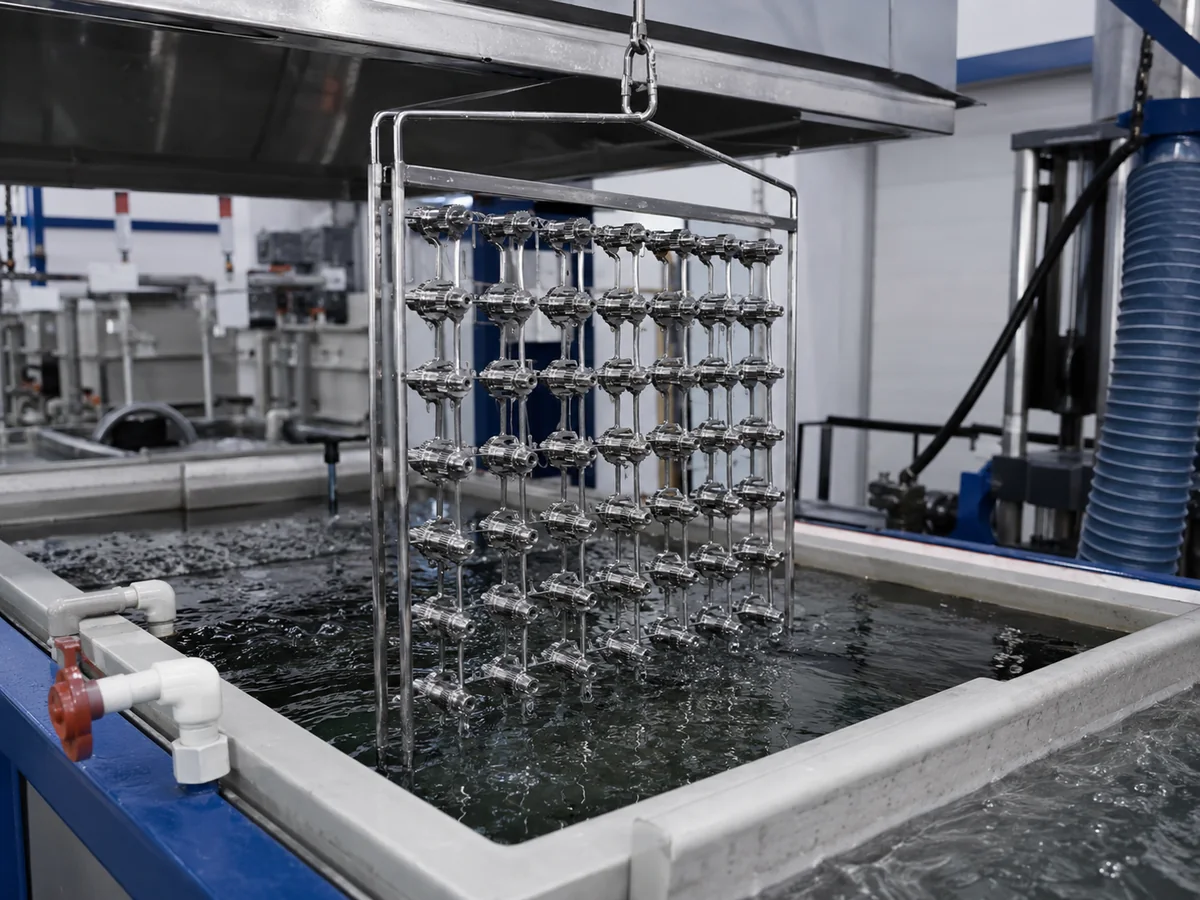
Concept image illustrating the Electroplating process
Concept image for process illustration

PROCESS OVERVIEW

Product review starts with process conditions

Bath composition alone does not determine electroplating quality. Current-density distribution, anode condition, additive balance, agitation, filtration and contamination history are reviewed together.

Suitability is reviewed with the substrate, upstream and downstream stages, control items, and required finish—not by product name alone.

Applicable substrates & targets
Steel and iron · Copper and copper alloys · Zinc-based surfaces · Nickel underlayers · Connectors and electrical contacts
Application scope
Copper plating · Nickel plating · Tin plating · Zinc and chromium plating · Silver plating · Gold plating · Passivation and anti-tarnish

CONTROL POINTS

Key control items to review before application

Current settings and recent changes help establish a more useful inspection sequence.

  1. 01pH, temperature and metal concentration
  2. 02Current density and voltage
  3. 03Anode area and condition
  4. 04Brightener and additive balance
  5. 05Air or mechanical agitation
  6. 06Circulation, filtration and particles
  7. 07Hull Cell testing
  8. 08Thickness and corrosion performance

TROUBLESHOOTING

Common issues and first checks

One symptom can involve several process factors, so likely causes and the inspection sequence are reviewed together.

01

Burning or roughness

Likely causes
Excess current, low metal, poor agitation or additive imbalance
First checks
Compare the current range with the Hull Cell high-current area
02

Pits or pinholes

Likely causes
Particles, organics, attached gas bubbles or weak filtration
First checks
Separate filtration, cleaner carry-over and carbon-treatment needs
03

Thickness or brightness variation

Likely causes
Current distribution, rack contact, anode layout or additive variation
First checks
Record thickness by position together with voltage and current
04

Tarnish or low corrosion resistance

Likely causes
Low thickness, rinse residue or poor post-treatment/drying
First checks
Check thickness, final rinse, post-treatment and drying records

TECHNICAL SUPPORT

PLACHEM support scope

Field conditions and defect symptoms are used to organize the items that should be checked first.

  1. 01Bath analysis and replenishment-history review
  2. 02Cause classification using Hull Cell panels and defect samples
  3. 03Current, agitation, anode and filtration review
  4. 04Corrective direction for pits, burning, thickness and color variation

Discuss application conditions for Electroplating

Share the substrate, process sequence, chemicals in use, control values, defect symptoms, or required documents.